
BESS revenue assessment for battery storage
Revenue forecast for battery energy storage systems (BESS) from day-ahead and intraday trading and balancing reserve (FCR, aFRR, mFRR), with cycles, ageing and sensitivities – as a basis for financing, sizing and transactions.
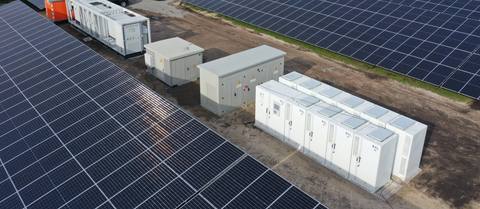
Photo: DroneWize
Background
Project financing
Storage projects have no fixed feed-in tariff. Lending banks require a traceable revenue forecast as the basis for the business case and the credit decision.
Sizing
Power and storage duration determine the achievable revenues. Variants are compared under the same assumptions, see storage sizing.
Storage at a PV park
With a shared grid connection, the generating plant and the storage system influence each other. The plant is assessed as a whole.
Purchase and sale
The assumed revenues largely determine the purchase price. An independent assessment serves both sides as a basis for negotiation.
Where the revenues of a battery storage system come from
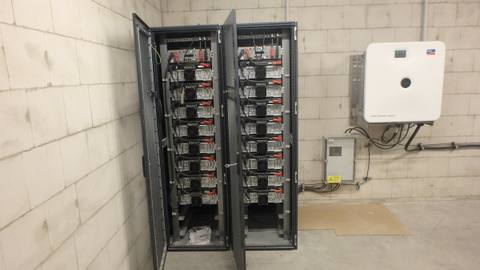
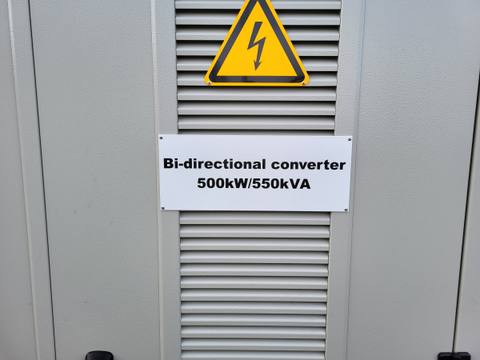
A battery storage system does not generate electricity. Its revenues come from shifting energy in time and from providing ancillary services. An assessment based on the amount of energy generated, as the yield assessment provides for photovoltaic systems, cannot be applied to a storage system.
The revenues depend on the mode of operation and the chosen marketing. Technically identical storage systems at the same grid connection point can therefore achieve different results. For the economic viability of a large-scale battery storage system, the expected revenues over the operating life are decisive.
The revenue assessment evaluates these revenues with time resolution over the operating life, in a scope agreed according to the question.
| Market | Revenue source | Basis of the revenues |
|---|---|---|
| Spot market | Day-ahead | price differences within the following day, traded in the daily auction on the day before |
| Spot market | Intraday auctions | auctions on the day before and on the delivery day (IDA1 to IDA3), price differences compared with day-ahead prices |
| Spot market | Continuous intraday | continuous trading until shortly before delivery, short-term price peaks and troughs |
| Balancing reserve | FCR (frequency containment reserve) | remuneration for reserved power |
| Balancing reserve | aFRR (automatic frequency restoration reserve) | capacity price for reserving power and energy price for energy called off |
| Balancing reserve | mFRR (manual frequency restoration reserve) | capacity price for reserving power and energy price for energy called off |
| Plant operation | Storage at a generating plant | absorbing energy that would otherwise be curtailed or fed in without remuneration |
The revenue sources compete for the same capacity; the individual revenues cannot be added together. The German transmission system operators publish the results of the balancing reserve (Regelleistung) tenders on regelleistung.net.
Contents of the revenue assessment
The term revenue assessment is not standardised; the scope of services differs between providers. The scope is agreed in advance according to the occasion and the available data. Possible components are:
| Component | Content |
|---|---|
| Revenue sources | day-ahead, intraday (auctions and continuous) and balancing reserve (FCR, aFRR, mFRR), stated separately, with allocation of the shared capacity |
| Backtest | revenues that would have been achievable on historical price data in past years; without forecast |
| Forward calculation | based on price forward curves from a provider specialising in electricity market forecasts or on scenarios provided; the curve and its date are stated |
| Cycles and ageing | loss of capacity according to number of cycles and mode of operation, as far as the manufacturer's data allow |
| Efficiency and auxiliary consumption | losses of the system over the operating life |
| Storage at generating plants | shared grid connection, limitation of the feed-in power, permissibility of charging from the grid, negative prices and § 51 EEG (German Renewable Energy Sources Act) |
| Ranges and sensitivities | revenue bands for the main assumptions |
| Economic indicators | if requested and if cost and financing data are available |
| Review of existing revenue calculations | check of third-party assumptions against the technical side: where they hold and where they do not |
Simulation-based storage sizing
Before the question of revenues there is usually another one: how large should the storage system be? Power and storage duration determine the achievable revenues, the investment and the requirements for the grid connection. Once the order has been placed, none of this can be changed.
The result shows the size beyond which the additional revenue no longer covers the additional cost. We carry out sizing studies for community energy cooperatives and energy utilities, among others, either on their own or as a preliminary stage to the revenue assessment; the calculation methods are the same.
Variants under the same assumptions
- Combinations of power and capacity
- Operation with and without coupling to a generating plant
- Different routes to market if required
- Comparison of additional revenue and additional cost for each variant
Price spreads and negative prices
The trading revenues of a storage system result from price differences within a day. A high share of photovoltaics increases these differences: solar generation reaches its maximum around midday, when prices are low. In hours with negative prices, a storage system is paid for absorbing energy.
How pronounced the price spreads are
The gap between the market value of solar power and the average wholesale price, and the number of hours with negative prices, show how pronounced these price spreads are. It is precisely these spreads that a storage system uses. Wholesale prices and negative prices are published by the Bundesnetzagentur (German Federal Network Agency) on smard.de, the market values by the transmission system operators on netztransparenz.de.
The further development of price spreads depends on the expansion of generation and storage capacity and on fuel prices, and is subject to considerable uncertainty. Extrapolating today's values over the entire operating life is not reliable. We therefore calculate with several price scenarios and state their origin and date. For storage projects, the range of results is reported as part of the result.
§ 51 EEG for a connected generating plant
For periods with a negative spot market price, the applicable value (the statutory reference value for calculating the market premium) of a subsidised plant is reduced to zero (§ 51 para. 1 EEG; exceptions for small plants in para. 2). For plants commissioned on or after 25 February 2025, this applies without a minimum duration of consecutive negative hours; it was introduced by the Solarspitzengesetz (amendment act on solar generation peaks, BGBl. 2025 I No. 51). For plants commissioned between 2023 and 24 February 2025, the version previously in force continues to apply (§ 100 para. 46 EEG).
As compensation, the remuneration period is extended after the end of the support period by the periods affected; for solar plants, their number is halved and made up through monthly quotas (§ 51a paras. 1 and 2 EEG).
A storage system at the same grid connection point can absorb energy that would otherwise be fed in without remuneration or curtailed during these periods. How much this amounts to depends on the design.
Revenue assessment and yield assessment
| Yield assessment | Revenue assessment | |
|---|---|---|
| Subject | amount of energy from a photovoltaic system, with losses and forecast reliability | revenues from generation and from operating a storage system |
| Result in | kilowatt hours | euros |
| Photovoltaics with feed-in tariff | usually sufficient | – |
| Battery storage | not applicable, no amount of energy generated | decisive |
The two assessments can build on each other. An existing yield assessment can serve as a basis, including one by another author.
Contact person

Dr.-Ing. Stefan Bofinger
Co-founder, expert in photovoltaics
Stefan Bofinger has worked as an expert in photovoltaics since 2002 and supports investors and banks in project developments as an independent advisor. He wrote his doctoral thesis on energy supply grids with a high share of photovoltaic solar energy, focusing on site assessment, solar power forecasting and grid integration.
Frequently asked questions
What is a revenue assessment?
A revenue assessment states the expected revenues of a plant over its operating life in euros. For battery storage, it covers trading on the day-ahead and intraday markets, the marketing of balancing reserve (FCR, aFRR, mFRR) and the interaction with a connected generating plant.
Why is a yield assessment not sufficient for a battery storage system?
A yield assessment determines an amount of energy generated. A storage system does not generate energy; it absorbs it and releases it again. Its revenues depend on price differences and ancillary services; these are not covered by a yield assessment.
Why can revenues from trading and balancing reserve not be added together?
Because they compete for the same capacity. Power reserved for balancing is not available for trading in the same period. Adding up the individual revenues overestimates the result.
Is the calculation based on historical prices or on forecasts?
Both are possible. A backtest on historical price data shows which revenues would have been achievable in past years and is well documented. For the forward calculation, we obtain price forward curves from a provider specialising in electricity market forecasts, or calculate with scenarios provided by you or your lender. The curve and its date are stated in the assessment.
Is battery ageing taken into account?
Yes, as far as the manufacturer's data allow. The loss of capacity depends on the number of cycles and the mode of operation; supply contracts often contain warranties on this. A mode of operation with high short-term revenues can be disadvantageous over the operating life.
Do you also review existing revenue calculations and business cases?
Yes. Often a revenue calculation by the project developer or a route-to-market provider is already available. We check the assumptions made in it against the technical side and state which of them are reliable and which are not.
What documents are needed?
Site and grid connection point, power and capacity of the storage system, and the data sheet with efficiency and cycle warranties. For a connected generating plant, also its design; for existing plants, the operating data of previous years. Missing details can be replaced by assumptions, which are disclosed in the assessment.
How long does a revenue assessment take?
Usually two to three weeks after receipt of complete documents. If it is urgent, please contact us.
How much does a revenue assessment cost?
Costs depend on scope and question; you receive a quote in advance.
Enquiry
Use the form, call us on +49 4103 121 4221 or write to kontakt@sonnwinn.de – whichever suits you best.
You do not need to attach documents to your enquiry – once we have received it, we will help you put together the documents required.
Which documents are helpful
- Site and grid connection point
- Power and capacity of the storage system
- Data sheet with efficiency and cycle warranties
- For a connected generating plant, its design; for existing plants, the operating data of previous years
- If available: revenue calculation by the project developer or route-to-market provider